Why future colonies must defend not only against cosmic radiation, but also digital intrusion
When we imagine the dangers facing future Mars colonists, we typically think of radiation exposure, life support failures, or micrometeorite impacts. Yet there’s another threat that could prove equally catastrophic: a cyberattack launched from millions of miles away. As humanity extends its presence beyond Earth, cybersecurity has become as critical to mission success as propulsion systems or radiation shielding.
The digital vulnerabilities of space systems are no longer theoretical. In 2022, the Viasat KA-SAT satellite network suffered a significant cyberattack that disrupted internet services across Europe. Just hours before
Russia’s invasion of Ukraine, hackers compromised tens of thousands of satellite modems, demonstrating how space-based infrastructure has become a contested domain. The Space Information Sharing and Analysis Center reported a 118% surge in space-related cyber incidents in 2025 compared to 2024, with approximately 117 publicly reported incidents from January through August alone—and these figures represent only what gets disclosed publicly.
For missions to Mars and permanent off-world colonies, the stakes escalate dramatically. A compromised
satellite in Earth orbit can be replaced or serviced. A hacked system on Mars, with communication delays of up to 44 minutes round-trip, could endanger an entire settlement with no possibility of immediate intervention from Earth.
The Unique Vulnerability of Space Systems
Space missions operate under constraints that make traditional cybersecurity approaches inadequate or impossible to implement. Understanding these limitations is essential to developing effective defenses.
Communication Delays: The Adversary’s Advantage
When Earth and Mars are at their closest approach, radio signals take approximately 3 minutes to traverse the distance. At maximum separation, that delay stretches to 22 minutes one-way—meaning a complete exchange of information requires 44 minutes. During certain orbital configurations, communication can be entirely blocked for days or even weeks when Mars passes behind the Sun relative to Earth.
These delays fundamentally alter the cybersecurity calculus. On Earth, intrusion detection systems can alert human operators who respond within seconds or minutes. A suspicious login triggers immediate investigation. Unusual network traffic prompts rapid countermeasures.
On Mars, those 44 minutes provide attackers with an enormous window. A compromised system could execute malicious commands, exfiltrate data, or sabotage critical infrastructure while operators on Earth remain unaware. By the time ground control realizes something is wrong and transmits a response, the damage may already be catastrophic.
This reality necessitates autonomous cyber defense systems capable of detecting, analyzing, and responding to threats without human intervention. As one cybersecurity specialist explained, defenders must be perfect everywhere, but offensive actors only need to succeed once.
Limited Computing Resources and Power
Every kilogram launched to space costs thousands of dollars. Power generation is constrained by solar panel efficiency and the availability of sunlight. These realities impose severe limitations on the computational
resources available for cybersecurity.
Terrestrial cybersecurity often employs computationally intensive solutions: machine learning models analyzing vast datasets, encryption algorithms requiring substantial processing power, constant software updates and patches. In space, particularly on smaller satellites or rovers, processing capability and power budgets are minimal.
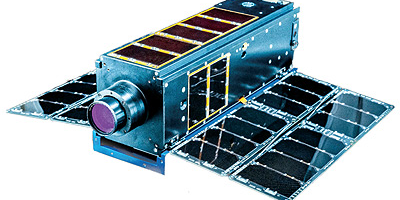
CubeSats—small, cost-effective satellites increasingly common in commercial space operations—often lack cybersecurity components entirely to reduce cost, size, and power consumption. This creates vulnerable points throughout space infrastructure that adversaries can exploit.
Future Mars colonies will face similar constraints. While larger than individual satellites, habitats and equipment will still operate under strict power budgets. Every watt dedicated to cybersecurity is power not
available for life support, agriculture, or other essential systems. Solutions must be lightweight, efficient, and capable of running on limited resources.
The Impossibility of Physical Access
When a terrestrial system is compromised, cybersecurity teams can physically isolate affected machines, examine hardware for tampering, or swap out components. In space, these options don’t exist.
Once a spacecraft launches, its hardware is fixed. Software can be updated remotely, but this introduces new risks—what if attackers compromise the update process itself? The update mechanism becomes a potential attack vector that must be secured as rigorously as any other system component.
Satellites can remain operational for a decade or more. The cybersecurity measures designed in 2025 must defend against threats that won’t emerge until 2035. This temporal dimension adds another layer of complexity: defenses must anticipate future attack methodologies using only the hardware capabilities available at launch.
Bandwidth Constraints and Update Challenges
Satellite communication bandwidth is precious and limited. Transmitting large security patches or software updates can consume bandwidth needed for scientific data, operational telemetry, or crew communications.
This scarcity means security updates must be carefully prioritized and compressed. It also means real-time monitoring generates less detailed data than terrestrial systems. Security teams must make decisions with incomplete information, operating under significant uncertainty about system state.
Legacy satellites present particular challenges. Many were launched before modern cybersecurity threats were fully understood, with minimal or nonexistent security measures. They continue operating because they remain
functional, but represent persistent vulnerabilities in space infrastructure. Updating them is difficult or impossible, yet they cannot simply be shut down without disrupting services.
The Threat Landscape Beyond Earth
Understanding who might attack space systems, and why, illuminates the defensive measures required.
State-Sponsored Actors
Nation-states possess both the motivation and capability to target space infrastructure. The 2025 Space Threat Assessment documented extensive counterspace activities by Russia, China, Iran, and North Korea, including cyberattacks on aerospace and satellite systems.
Russia has deployed satellites described by the U.S. Space Force as counterspace weapons, maneuvering into
suspicious proximity with American government satellites. Russian forces routinely jam and spoof GPS signals across multiple theaters, from the Baltic states through Ukraine to the Black Sea region. These activities mushroomed in mid-2024, demonstrating an expanding electronic warfare capability that blurs the line between physical and cyber operations.
China is launching satellites at an accelerating pace, making characterization and tracking increasingly challenging. The country has demonstrated anti-satellite capabilities and maintains sophisticated cyber operations targeting aerospace and defense sectors globally.
Iran’s Islamic Revolutionary Guard Corps has conducted cyberattacks against aerospace, satellite, construction, defense, energy, and other sectors. In February 2024, researchers identified malicious cyber activity aimed at
espionage that targeted aerospace and defense sectors across multiple countries. The Peach Sandstorm campaign, attributed to Iranian state actors, demonstrated persistent efforts to gather intelligence and conduct operations against satellite infrastructure.
North Korea’s cyber espionage activities target defense, aerospace, nuclear, and engineering entities worldwide to advance military and nuclear capabilities. Cyber threat groups with probable ties to North Korea conduct phishing campaigns masquerading as energy companies and aerospace industry entities.
These aren’t isolated incidents—they represent systematic efforts by nation-states to develop counterspace capabilities, both kinetic and cyber. A Mars mission or colony would inherit these tensions, becoming a potential target in any terrestrial conflict that extends into space.
Hacktivists and Criminal Organizations
Beyond state actors, politically motivated hackers and criminal groups pose threats to space systems.
Ransomware attacks could cripple satellite operators, demanding payment to restore services. Hacktivists might target space missions to make political statements or disrupt governments they oppose.
The challenge of attribution makes these threats particularly insidious. When an attack occurs, determining who launched it and why can be extraordinarily difficult. Attackers may publicly claim responsibility with
screenshots or data dumps to pressure victims, but verification is often impossible. False flag operations, where attackers disguise themselves as other groups, further complicate response.
The Insider Threat
Space missions involve dozens of organizations: government agencies, commercial contractors, international partners, academic institutions. Each partnership introduces potential access points for malicious insiders or compromised credentials.
Supply chain security becomes paramount. A single compromised component manufactured by a subcontractor could introduce vulnerabilities into an entire mission. The European Cooperation for Space Standardization released technical standards and guidelines addressing these concerns, but implementing them across complex, multinational programs remains challenging.
Disinformation and Psychological Operations
Future attacks may target not just systems but public perception and crew morale. Imagine malicious actors spoofing signals from satellites monitoring asteroids, creating false alarms about incoming impacts. The resulting panic and unnecessary evacuations would erode public trust in space-based monitoring.
For Mars colonists, psychological operations could be devastating. False messages purporting to come from Earth could sow discord, undermine leadership, or trigger panic. Given communication delays, verifying
message authenticity becomes critical—and difficult.
Emerging Defensive Technologies
The unique challenges of space cybersecurity are driving innovation in defensive technologies and approaches.
Autonomous Intrusion Detection
The Aerospace Corporation developed SpaceCOP, a prototype intrusion detection system designed specifically for spacecraft. Rather than relying on traditional indicators of compromise (IOCs), which require deterministic evidence of intrusion, SpaceCOP uses indicators of behavior (IOBs)—probabilistic signatures suggesting
possible attacks.
Through testing with NASA’s top 50 attack scenarios against spacecraft, researchers identified nearly 200 spacecraft behaviors that could indicate cyber attacks. SpaceCOP monitors for these behaviors, detecting threats that would be invisible to conventional telemetry-based systems.
The U.S. Department of Homeland Security is working to integrate these capabilities into NASA’s Core Flight System, a widely used open-source spacecraft operating system. By “baking in” security from the foundation, future missions will have baseline protection that individual operators can build upon.
On-Orbit Cyber Defense
Deloitte launched a satellite in March 2025 carrying Silent Shield, an on-orbit testbed monitoring and protecting against cyber threats to space assets. The system represents a shift from purely ground-based security to
defenses operating in space itself.
Silent Shield collects traffic data from the satellite and uses it to train AI models on the ground. The ultimate goal is enabling satellites to autonomously detect anomalies and take protective actions—shutting off
compromised ports, putting payloads in safe mode, or isolating affected systems—without waiting for ground control.
This approach addresses the communication delay problem directly: if threats can be detected and countered autonomously in orbit, the 44-minute response gap to Mars becomes less critical.
Quantum-Resistant Cryptography
As quantum computing advances, traditional encryption methods face obsolescence. Quantum computers could potentially decrypt communications that current cryptography renders secure. For long-duration space missions, this threat is immediate: data encrypted today using current methods might be intercepted and stored by adversaries, then decrypted years later when quantum computers become available.
Post-quantum cryptography—encryption algorithms designed to resist quantum computing attacks—is emerging as essential for space communications. Implementing these algorithms presents challenges given spacecraft computational constraints, but the alternative is unacceptable: sensitive communications that become readable to adversaries in the future.
Zero Trust Architecture
The zero trust security model assumes no user or system should be automatically trusted, even if they’re inside
the network perimeter. Every access request is verified, every connection authenticated, every action monitored.
For Mars colonies, zero trust architecture means treating every habitat module, every rover, every
communications relay as potentially compromised. Access to life support systems, power generation, food production—all the critical infrastructure of survival—would require continuous authentication and authorization.
This approach introduces operational overhead but provides defense in depth. A compromised system cannot easily pivot to attack others if each connection requires fresh verification.
Blockchain for Provenance and Authentication
Blockchain technology offers potential solutions for verifying the authenticity of communications and
commands in high-latency environments. By creating immutable records of messages, commands, and system states, blockchain can help verify that instructions actually originated from authorized sources rather than being spoofed by attackers.
For Mars colonists receiving instructions from Earth, blockchain-verified command chains could provide confidence that orders are legitimate despite the communication delay preventing real-time verification.
Regulatory and International Cooperation
Effective space cybersecurity requires coordination that transcends individual missions or organizations.
Evolving Regulatory Frameworks
The European Union is leading regulatory efforts through the NIS2 Directive and proposed EU Space Act. NIS2
currently mandates cybersecurity and incident reporting requirements for ground-based infrastructure supporting space services. The Space Act, proposed in June 2025, would extend these requirements further, creating comprehensive cyber resilience standards for space systems.
In the United States, regulatory authority is fragmented across multiple agencies. The proposed Space Infrastructure Act would designate space systems as critical infrastructure and establish a coordinating
framework. The Satellite Cybersecurity Act, reintroduced in December 2025, would direct the Commerce Department to create voluntary cybersecurity guidelines for the satellite industry.
The challenge lies in creating standards that are both robust enough to address threats and flexible enough to accommodate rapid technological change. Regulations developed today must remain relevant for missions launching years in the future.
International Information Sharing
The Space Information Sharing and Analysis Center facilitates cooperation on cyber threats across space-faring nations and commercial operators. As one expert noted, “the international allied space community is only as strong as its weakest link.”
A Mars colony would likely involve international cooperation on an unprecedented scale—a truly global settlement requiring contributions from multiple nations. The cybersecurity of such an endeavor demands equally unprecedented cooperation, with adversaries recognizing that attacks on the colony threaten a shared human achievement rather than a specific nation.
Standards Development
The European Cooperation for Space Standardization (ECSS) released technical standards and guidelines in July 2024 addressing cybersecurity across the satellite lifecycle: development, deployment, operations, and decommissioning.
NASA, the European Space Agency, and the U.S. Space Force are all working to develop cybersecurity
guidelines protecting space infrastructure. Harmonizing these efforts into coherent, interoperable standards remains an ongoing challenge.
Implications for Mars Colonization
The cybersecurity challenges facing current Earth-orbiting satellites will only intensify for permanent settlements on Mars.
Critical Infrastructure Protection
On Earth, cyberattacks can disrupt services, steal data, cause financial losses. On Mars, a successful cyberattack could be immediately lethal. Compromised life support systems, sabotaged power generation, disabled environmental controls—any of these could kill colonists within hours.
This reality demands that cybersecurity be treated as a life safety issue equivalent to pressure vessel integrity or radiation shielding. Just as colonies will have redundant life support and backup power systems, they must have layered, redundant cybersecurity defenses.
Autonomous Operation Requirements
Communication delays mean Mars colonies must operate autonomously for extended periods. During solar conjunction, when Mars and Earth are on opposite sides of the Sun, communications may be completely blocked for weeks. Colonies must be self-sufficient—including in cybersecurity.
This autonomy extends beyond automated defenses. Colonists will need cybersecurity expertise on-site, capable of responding to novel threats without relying on Earth-based specialists. Training programs, continuous skill development, and knowledge sharing will be essential.
Supply Chain Security from Earth
Mars colonies will depend on regular cargo shipments from Earth for years or decades before achieving self- sufficiency. Each shipment represents a potential attack vector. Compromised hardware or software in supply ships could introduce vulnerabilities into colony systems.
Secure supply chains will require rigorous verification of every component, inspection of every cargo container, validation of every software package. The physical distance actually provides some protection—infected
systems cannot easily “phone home” to controllers on Earth due to communication delays—but prevention remains preferable to remediation.
Data Sovereignty and Privacy
Who owns the data generated by Mars colonists? What privacy protections apply in an extraterrestrial
settlement? As humanity establishes presence beyond Earth, these questions move from philosophical to practical.
Colonists will generate vast amounts of data: scientific observations, personal communications, medical records, operational telemetry. Protecting this data from interception, manipulation, or unauthorized access becomes a cybersecurity imperative with legal, ethical, and practical dimensions.
The Path Forward
Securing space missions against cyber threats requires sustained effort across multiple domains.
Investment in Research and Development
Current space cybersecurity capabilities lag behind the threat. Continued research into lightweight, efficient, autonomous security systems is essential. This includes:
Advanced AI and machine learning for threat detection that can operate on limited computational resources
Novel encryption methods resistant to both current and quantum computing attacks Behavioral analysis systems tailored to space operations
Resilient communication protocols that maintain security despite delays and disruptions
Building a Cybersecurity-Aware Workforce
Future space missions will need personnel who understand both space operations and cybersecurity. This interdisciplinary expertise is currently rare. Educational programs must train the next generation of space professionals in defensive thinking, threat modeling, and secure system design.
For Mars colonists, cybersecurity literacy will be as essential as EVA training or radiation safety. Every crew member must understand basic cyber hygiene, recognize potential attacks, and know how to respond.
Designing Security from the Beginning
The most effective cybersecurity is built in from the start rather than bolted on afterward. Future spacecraft, habitats, and rovers must be designed with security as a core requirement, not an afterthought.
This design philosophy extends to operational procedures, communication protocols, and crew training. Security considerations should inform every aspect of mission planning.
Preparing for Failures
No defense is perfect. Attack methodologies will continue evolving. Future colonists must prepare not only to prevent attacks but to operate through them.
This requires redundant systems, graceful degradation under attack, rapid recovery procedures, and the psychological resilience to function when critical systems are compromised. Just as colonies will practice responding to life support failures or medical emergencies, they must rehearse cyber incident response.
Conclusion: The Invisible Shield
When humans establish permanent presence on Mars, they will build habitats to protect against radiation,
pressure suits to enable surface operations, and greenhouses to produce food. These physical protections will be visible, tangible evidence of human ingenuity adapting to an alien world.
The cybersecurity systems protecting those same colonists will be largely invisible—running silently in the background, detecting and countering threats that most people never see. Yet these digital defenses will be equally essential to survival.
A successful Mars colony will require defending against cosmic radiation and digital intrusion with equal vigor. The former can kill colonists in years through accumulated exposure. The latter could do so in minutes if critical systems are compromised.
As we extend humanity’s reach beyond Earth, we carry not just our aspirations for exploration and discovery but also the conflicts and threats of our home world. Cybersecurity for space missions isn’t about protecting
machines or data—it’s about protecting human life in the harshest environment imaginable, millions of miles from any help Earth could provide.
The challenge is immense, but so is the imperative. Future generations living on Mars and beyond will depend on our success in building resilient, secure systems capable of defending against threats we can anticipate and those we cannot yet imagine. Their survival may depend on defensive technologies being developed today, in
laboratories and operations centers around the world, by people working to ensure that humanity’s expansion into space is not undermined by our digital vulnerabilities.
The final frontier demands not only courage and technical prowess but also vigilance against intrusions that respect no boundary, terrestrial or otherwise. As we build the infrastructure for multiplanetary civilization, we must simultaneously construct the invisible shield of cybersecurity that will protect it.
@ImageCredit: Moonlighter, Aerospace Corporation
MarsTV.live continues to explore the challenges and opportunities of space exploration, bringing you insights into the technologies and systems that will enable humanity’s future beyond Earth.